Creating a home office that balances productivity with relaxation can make a big difference in how you work and feel throughout the day. Whether you’re new to working from home or looking to improve your current setup, a well-designed space can enhance focus, reduce stress, and make your workday more enjoyable. Here are some helpful tips to guide you in creating a relaxing and productive home office environment.
Choose the Right Location
Natural Light Matters
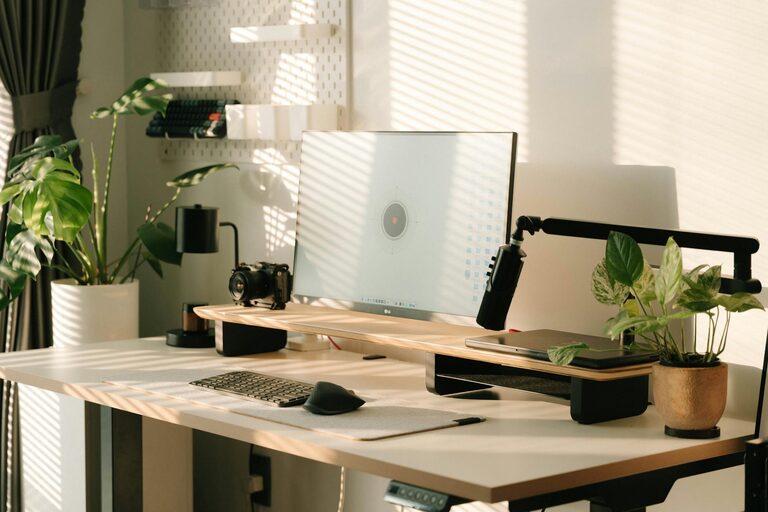
Try to position your desk near a window where you can benefit from natural light. Natural daylight can improve mood, energy, and alertness, helping you stay productive throughout the day. If your room doesn’t have much natural light, consider daylight bulbs or a good quality desk lamp that mimics natural light.
Minimise Distractions
Select a quiet spot away from the main living areas if possible. Closing the door or using noise-cancelling headphones can help reduce interruptions. The calmer your environment, the easier it will be to concentrate.
Invest in Comfortable Furniture
Ergonomic Seating
A supportive office chair is essential. Look for one with adjustable height, lumbar support, and a comfortable seat cushion. Sitting in a chair that supports good posture will help reduce back pain and fatigue.
Desk Height and Size
Choose a desk that fits your workspace well and allows enough room for your computer, notebooks, and other essentials without feeling cramped. Adjustable desks or standing desks are also great options to alternate between sitting and standing.
Keep Your Space Organised
Declutter Regularly
A tidy space supports a clear mind. Try to keep your desk free from unnecessary items and only keep what you use daily within reach. Use organisers, trays, or drawers to store stationery and documents.
Use Storage Solutions
Shelves, filing cabinets, and boxes can help keep papers and supplies organised and out of sight when not in use. Label containers so you can easily find what you need, saving time and stress.
Add Personal and Relaxing Touches
Bring in Plants
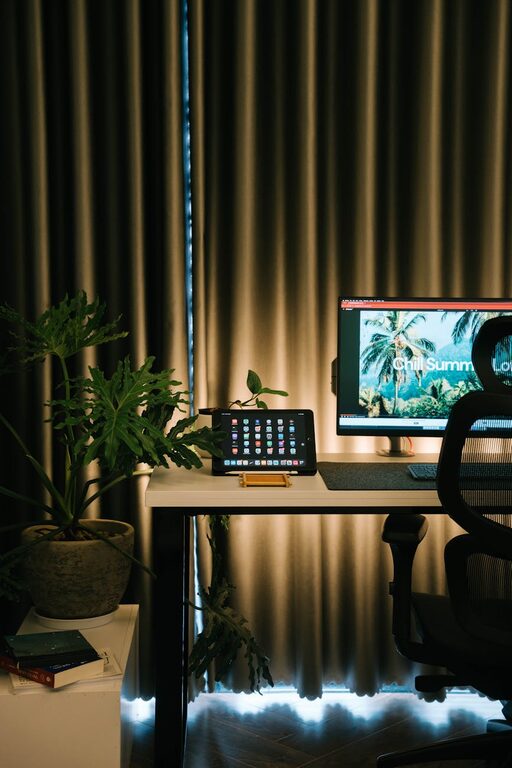
Houseplants not only enhance the aesthetic of your space but also improve air quality and add a calming presence. Consider easy-to-care-for plants such as succulents or spider plants.
Choose Soothing Colours
Soft, neutral colours or gentle pastels can create a peaceful atmosphere. Avoid overly bright or distracting shades which might make it harder to focus.
Include Personal Items
Add a few personal touches like photos, artwork, or inspirational quotes that motivate you. Just be careful not to overdo it, so the area remains serene.
Optimise Technology and Connectivity
Reliable Internet
Ensure your internet connection is strong and stable to avoid frustrating interruptions during work.
Cable Management
Keep cables neat and organised with clips or cable sleeves. This small step makes your desk look cleaner and reduces clutter.
Proper Lighting for Screens
Avoid glare on your computer screen by positioning it at right angles to windows or lights. You might want to invest in an anti-glare screen protector.
Establish a Workflow and Routine
Set Boundaries
Set clear work hours and stick to them to separate work time from personal time. This can help maintain a balanced lifestyle.
Create a To-Do List
Start each day by prioritising tasks. A simple list helps keep you on track and offers a sense of achievement as you tick off completed items.
Take Regular Breaks
Incorporate breaks to stretch, move, or simply breathe. Short pauses can refresh your mind and improve productivity.
Consider Comfort and Wellbeing
Temperature Control
Make sure your office space is neither too hot nor too cold. Comfort in temperature helps maintain focus and prevent discomfort.
Air Quality
Open windows for fresh air when possible, or use an air purifier to keep the environment healthy.
Soundscapes
Some people find background music or nature sounds helpful for concentration. Experiment with what works best for you.
—
Creating a home office environment that is both relaxing and productive requires attention to details that support your work and wellbeing. By choosing the right location, investing in comfortable furniture, keeping the space organised, and adding personal touches, you create a space where you can thrive professionally and feel peaceful at the same time. Remember, small changes can make a big difference, so start with one or two adjustments and build your ideal workspace over time.
About the Author